Lodges, Great Camps, and the Price of October
New York State hotels for a weekend, from Adirondack great camps to Catskills motels, with foliage-season premium windows that shift every autumn.
Lodges, Great Camps, and the Price of October
The common assumption about a foliage weekend in New York State is that you book a room near the leaves and pay a little extra. The real picture is harder. The foliage premium is not a surcharge you can predict. It is a market that resets every September based on when the color peaks, and the peak moves with elevation and latitude, not the calendar. You are buying a window, not a date. That window, roughly late September to late October, pushes room rates 1.8x to 3.0x above non-peak prices. Saturday occupancy in leaf-peeping zones hits 95 to 100 percent. The top-tier properties require 6 to 12 months of advance booking. The question is not which hotel you want. It is whether you can find one at all.
New York State weekend hotels fall into four categories. Each suits a different drive time, a different budget, and a different tolerance for the constraints that come with a family. The categories are the Adirondack Great Camps, the lake lodges, the Hudson Valley and Catskills inns, and the chain hotels along the I-87 Northway corridor. Every recommendation carries a drawback. No downside means no usable advice.
Two-night minimums apply at roughly 80 percent of independent inns and resorts on weekends from May through October. That constraint excludes the single-night Friday stopover. Budget for it. Budget also for the resort fees that run $25 to $50 per night at non-chain properties, and parking fees of $15 to $40 at resort properties. The chain hotels on the Northway charge zero for parking. That fact alone shifts the math for some trips.


Adirondack Great Camps: the Original Rustic Luxury
What a Great Camp Actually Is
The Great Camps number roughly three dozen surviving properties across the Adirondacks. Seven of them hold National Historic Landmark designation: Camp Santanoni, Camp Uncas, Camp Pine Knot, Camp Sagamore, Camp Topridge, Eagle Island Camp, and Camp Wonundra. These are not hotels in the conventional sense. They are compounds of log and stone buildings built between 1877 and the 1920s for families like the Vanderbilts, the Rockefellers, and the Durants. You sleep in a guest room that was once a guide cabin or a boathouse. You eat family-style in a great hall with a massive stone fireplace. The experience is communal and controlled. The downside is the schedule. Meals are fixed, activities are programmed, and you do not have the freedom to walk into town for dinner because there is no town.
Camp Sagamore and the Point: Two Extremes
Camp Sagamore: The Entry Point
Camp Sagamore sits on Raquette Lake, about a 4.5-hour drive from New York City and 4 hours from Boston. The nightly rate ranges from $200 to $500, depending on the room type and season, with a minimum stay of two nights. At the lower end of that range in foliage season, this is a rare manageable entry point into the Great Camp experience. The catch is that $200 rooms are few and they book first. Call the property directly to ask about specific dates, and do it 6 to 12 months ahead. The $500 rooms are more available but they land at the same price point as a luxury lodge with more autonomy.
The Point: Total Seclusion, Total Cost
The Point, on Upper Saranac Lake, is the opposite end. The nightly rate runs $2,500 to $4,500, with a two-night minimum standard and a three-night minimum during peak foliage and holiday periods. The drive is similar, about 4.5 hours from New York City. The Point is all-inclusive: meals and drinks are folded into the rate. But the base price is so high that the all-inclusive nature is a feature for convenience, not a value argument. Book this if you want total seclusion, a private chef, and no decisions beyond which Adirondack chair to sit in. For everyone else, the premium does not justify the lost flexibility.
Lake Lodges: Lake Placid Lodge and the Sagamore
The lake lodges sit in a different category. They are full-service resorts with restaurants, spas, and lake access, and they cater to a broader range of guests than the Great Camps. But the price spread is wide and the ancillary fees add up.
| Property | Nightly Rate Range | Min Stay | Extra Fees |
|---|---|---|---|
| Lake Placid Lodge | $800 - $2,500 | 2 nights weekends year-round | Resort fee $25 - $50 (varies) |
| The Sagamore (Lake George) | $250 - $700 | 2 nights typical | $40/night resort fee + $25/night parking |


Hudson Valley and Catskills Inns: the Weekend Drive
The Rate Spike and the Inventory Problem
If the Adirondacks require a full day of driving, the Hudson Valley and the mountains to the southwest fit a tighter window. Hudson Valley inns run $200 to $500 per night in non-peak season, with about 70 percent of properties enforcing a two-night minimum on weekends. Inns across the ridge run $175 to $450, with about 60 percent requiring two nights. These numbers double or triple in foliage season. A $250 room in September becomes $500 or more in the first two weeks of October.
The practical problem is not the rate itself. It is that the inventory evaporates. Saturday occupancy in leaf-peeping zones hits 95 to 100 percent. If you are starting from New York City, your drive-time band is 90 minutes to 2.5 hours. From Boston, the Hudson Valley is a 3-to-4-hour drive, which pushes it into the long-weekend category rather than a pure two-day trip. The mountains are 2.5 to 3 hours from either city. For a family with a stroller or a carrier, that is the upper limit before you need a planned stop for a bathroom break and a diaper change.
The Rain Test
The rain plan for these inns is indoor pools, game rooms, or adjacent small towns with a bookstore and a diner. If the property does not have at least two of those three, skip it for a rainy Saturday.
Northway Chain Hotels: the Cheap Option with One Trap
The Numbers
The chain hotels along the I-87 corridor between exits 8 and 19 run $110 to $180 in non-peak season. In foliage season, the same rooms go for $200 to $350. That is a 1.8x to 2.0x multiplier, on the low end of the foliage premium range. The Saratoga racing season, mid-July through early September, pushes rates even higher: $250 to $400, a 2.5x to 4.0x multiplier within Saratoga Springs itself and 1.5x to 2.0x within a 30-mile radius.
The Overlap Trap
The trap is that the Saratoga season overlaps with the start of foliage season in late September. If you try to book a chain hotel near Lake George for the first weekend of October, you are competing not just with leaf peepers but with race attendees who booked 6 to 10 months ahead for the summer meets. The chain hotels charge zero for parking, and they do not impose resort fees. The tradeoff is the experience. You get a room, a continental breakfast, and a parking lot. No lake view. No guided hike. No communal hearth. For a family that needs a clean room and a fast exit in the morning, that is correct. For anyone seeking atmosphere, it is wrong.
What it Costs to Bring a Family
Drive Time and the Stroller Math
Family travel in foliage season requires a separate budget line for the constraints. If you are using a stroller or a carrier, the drive length matters. From New York City, the Hudson Valley is a one-stop trip. The mountains to the west are a one-stop trip if you leave early. The Adirondacks are a two-stop trip, and that means adding an hour to the total travel time.
Rain Plans and the Indoor-Pool Divide
Verify that the property has an indoor pool or a covered common area. Many inns and lodges assume you will be outdoors all day. When the rain hits, you are stuck in a small room with a phone and a bad WiFi connection. The Sagamore has an indoor pool. Camp Sagamore does not. That distinction changes the viability of a rainy weekend entirely.
The Two-Night Minimum Workaround
The two-night minimum on weekends eliminates the Friday-to-Saturday option for most independent properties. If you can leave Thursday night and arrive late, you gain Saturday as a full day and avoid the Friday evening traffic. If you cannot leave until Friday, resign yourself to a Saturday afternoon arrival and a Sunday departure that feels rushed. The chain hotels are more likely to accept a single night, but they fill first.
Common Questions
How far ahead should I book for foliage season?
Top-tier properties like The Point and Lake Placid Lodge require 6 to 12 months. Mid-range inns in the Hudson Valley and Catskills fill 3 to 4 months ahead. Chain hotels on the Northway fill 1 to 2 months ahead. Do not gamble on last-minute cancellations.
Can I do a foliage weekend from Boston?
Yes, but the drive to the Adirondacks is 4 hours, which pushes the trip to a three-day weekend. The Catskills and Hudson Valley are 2.5 to 4 hours. The Hudson Valley works for a two-day trip if you leave by 7 am. The Catskills are tight but doable.
What is the cheapest option for a foliage weekend?
Northway chain hotels between exits 8 and 19. Non-peak rate is $110 to $180. Foliage rate is $200 to $350. No resort fee, no parking fee. The tradeoff is zero atmosphere. You get a room and a parking lot.
Do any properties waive the two-night minimum?
Chain hotels often do. Independent inns and resorts enforce it on 80 percent of weekends from May to October. Call the property directly three days before. Some will accept a single night if they have an unreserved room. Do not rely on it.
Read next
-
 Where to Stay in New York State for a Weekend Base
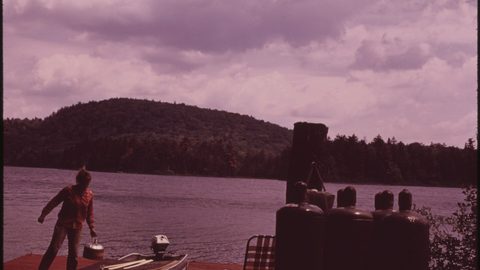
Choose a New York State weekend base town by drive time from NYC or Boston, diner availability, and seasonal windows that determine whether you get foliage or black flies.
Where to Stay in New York State for a Weekend Base
Choose a New York State weekend base town by drive time from NYC or Boston, diner availability, and seasonal windows that determine whether you get foliage or black flies.
-
 Flying In for a Northeast Weekend and Which Airport Saves the Drive
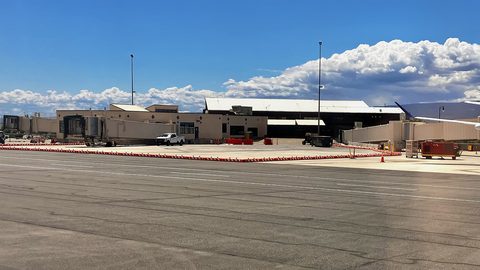
Which New York airport to fly into for a weekend road trip, ranked by how much drive time each one saves you.
Flying In for a Northeast Weekend and Which Airport Saves the Drive
Which New York airport to fly into for a weekend road trip, ranked by how much drive time each one saves you.
-
 New York State Weekend Drives Worth the Fuel Gauge
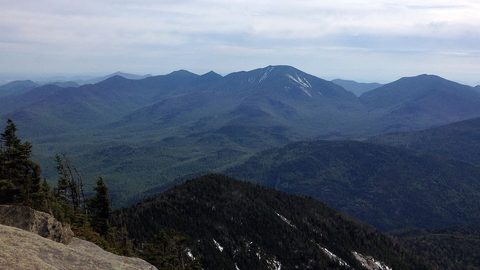
New York State weekend drives ranked by honest distance from New York City and Boston, with seasonal windows for foliage, black flies, and mud season that shift each year.
New York State Weekend Drives Worth the Fuel Gauge
New York State weekend drives ranked by honest distance from New York City and Boston, with seasonal windows for foliage, black flies, and mud season that shift each year.
-
 Best Time to Visit New York State for a Weekend Drive
Find the right weekend window for New York State, with foliage, black fly, and mud season timing that shifts year to year, plus the honest case for November and April.
Best Time to Visit New York State for a Weekend Drive
Find the right weekend window for New York State, with foliage, black fly, and mud season timing that shifts year to year, plus the honest case for November and April.
-
 Driving the Northeast for a Weekend Without Losing Friday
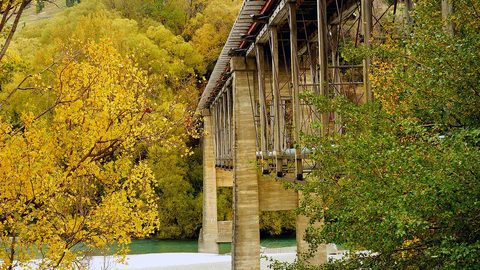
Which Northeast roads work for a Friday escape from New York City or Boston, with honest drive-time bands and seasonal hazard windows that shift each year.
Driving the Northeast for a Weekend Without Losing Friday
Which Northeast roads work for a Friday escape from New York City or Boston, with honest drive-time bands and seasonal hazard windows that shift each year.
-
 New York State Weekend Routes Worked Out Road by Road
Two-night New York State road trip routes from NYC or Boston, with drive-time bands and season windows for every leg.
New York State Weekend Routes Worked Out Road by Road
Two-night New York State road trip routes from NYC or Boston, with drive-time bands and season windows for every leg.
-
 Catskills
 towns and hikes ranked by real Friday-afternoon drive time from Manhattan, with season windows.
Catskills
Catskills towns and hikes ranked by real Friday-afternoon drive time from Manhattan, with season windows.
-
 New York City
The weekend starts when you clear the merge. How to leave New York City by car on a Friday and get back in on Sunday without losing hours.
New York City
The weekend starts when you clear the merge. How to leave New York City by car on a Friday and get back in on Sunday without losing hours.
-
 Adirondacks
Adirondack towns and trailheads sorted by drive time from NYC and Boston, with black fly and mud season windows.
Adirondacks
Adirondack towns and trailheads sorted by drive time from NYC and Boston, with black fly and mud season windows.