Leaf-Peeping Roads That Skip the Insta-Famous Overlooks
Skip the bumper-to-bumper leaf-peeping circuits and take these New York and New England back roads instead, with drive times and seasonal windows.


Leaf-Peeping Roads That Skip the Insta-Famous Overlooks
Peak Saturday on Route 73 through Keene Valley and Route 9N from Lake George to Ticonderoga is 10:00 to 16:00 stop-and-go. Weekday volume on those same roads drops to 20 to 30 percent of that. You are not here for those roads. You want county routes, not parkways. You want segments that deliver the same colour gradient without the gridlock that has turned the Kancamagus Highway into a parking lot. Every route below includes a drive-time band from New York City and from Boston, a shifting foliage window, and a clear statement on any abandoned site you will pass.
Western Adirondacks: Cranberry Lake to Stillwater Reservoir
Timing And The Drive
Drive time from New York City: 5 hours 15 minutes to 5 hours 45 minutes. From Boston: 5 hours 30 minutes to 6 hours. The foliage window opens in the last week of September and closes in the second week of October. This is high elevation, northern zone colour, so it runs early. Target county Route 3 from the village of Cranberry Lake northwest toward Star Lake, then Forest Road 29 south to the Stillwater Reservoir access. The pavement narrows. The maple density increases. The only vehicles you will meet are logging trucks and local pickups.
What To Expect On The Ground
The Oswegatchie River runs parallel to parts of this loop. Pull off at any gravel shoulder. Do not park blocking a gate. The abandoned fire tower on the north end of the Cranberry Lake tract is on state forest land, legally visitable on foot. Parking is free. Bring water and a paper map; cell service drops dead past the Cranberry Lake General Store. The failure case is a section closed for logging operations. The state DEC posts road closures at the Cranberry Lake ranger station. Check before you leave the pavement.
Southern Catskills: Route 97 Along the Delaware River
The Route And The Window
Drive time from New York City: 2 hours 30 minutes to 3 hours. From Boston: 4 hours 15 minutes to 4 hours 45 minutes. The foliage window runs from the second week of October through the last week of October. Route 97, signed as the Upper Delaware Scenic Byway, follows the New York side of the Delaware River from Port Jervis north to Hancock. The difference between this and the Kaaterskill Clove chaos: Route 97 has no single landmark that draws shuttle buses and Instagram crowds. It has 65 miles of river bends, hillsides that face south and west, and pull-offs every half mile.
Navigating The Hawk's Nest
You pass the abandoned Zane Grey Museum at Lackawaxen. The building is on private land. View it from the road. The route stays open in all but heavy snow, which is rare in the October window. The failure case is a southbound backup at the Hawk's Nest section near Port Jervis on a sunny Saturday. Solve it by driving north in the morning, south after 15:00. Weekdays are empty.
Mohawk Valley: Route 5 Between Amsterdam and Little Falls
The Colour Window
Drive time from New York City: 3 hours 45 minutes to 4 hours 15 minutes. From Boston: 4 hours to 4 hours 30 minutes. The foliage window runs from the second week of October through the third week of October. NY Route 5 is a two lane road that traces the Mohawk River between Amsterdam and Little Falls. This is the zone where the Adirondack foothills meet the Erie Canal corridor, and the colour progression is unusually long because you get both hillside hardwoods and riverside swamps that turn later.
Staying On Course
The abandoned Mohawk Valley Psychiatric Center outside Utica is visible from the road. The main buildings are on state land, legally visitable via a gravel drive, but interior entry is locked and posted against trespass. Look from the parking area. The failure case: combining this route with I 90 thinking it saves time. It does not. Stay on Route 5 the full 35 miles. The speed limit is 45 mph and the scenery is the point.
Inland Maine: Route 201 from Skowhegan to Jackman
The Northernmost Run
Drive time from New York City: 7 hours to 7 hours 30 minutes. From Boston: 4 hours 45 minutes to 5 hours 15 minutes. The foliage window opens the last week of September and closes the second week of October. This is Maine's Moose River Valley, the northernmost route in the Northeast's fall foliage drives. Route 201 from Skowhegan to Jackman is 80 miles of two lane road through the Kennebec River gorge and into the Moosehead Lake region. The traffic you will encounter: logging trucks, the occasional moose, and one general store in Moscow that serves the best whoopie pie within 50 miles.
Fuel And The Bridge
The abandoned Bingham bridge, a 1920s steel truss span just south of the town of Bingham, sits on public land at the end of an unmarked dirt track. Walkable. Do not climb the structure; the deck has rotted through in sections. The failure case is fuel. The last gas station north of Skowhegan is in Jackman. Fill up in Skowhegan. If you miss it, the Jackman station closes at 18:00 on Sundays.


Key Questions, Direct Answers
- Do I follow I LOVE NY foliage reports? Yes, but only as a broad directional guide. The weekly Wednesday report from Empire State Development covers 11 regions at a percentage-of-change scale. It relies on volunteer observers, so granularity is moderate. Cross reference with the New York State Parks foliage map or the automated satellite data from Explore Fall, which lags ground truth by 3 to 5 days. Use the report to tell you whether a region has started turning, not to decide your Tuesday route.
- What if the colour is late or early in a given year? Year to year timing shifts up to two weeks earlier or later. The primary driver is September rainfall and overnight temperatures. If the I LOVE NY report shows your target zone at 0 percent on its first September report, bump your trip by one week. If it shows 30 to 50 percent, go immediately. Peak is a 7 to 10 day moving target determined by cumulative cooling and daylight length.
- Should I book lodging before the trip? For Adirondacks and Catskills on October weekends, yes. Lake Placid area lodging for peak weekends requires booking 4 to 6 months ahead. Catskills around Woodstock and Phoenicia requires 3 to 4 months. Columbus Day weekend is often fully booked by July. The cancellation window that yields re availability is 7 to 14 days before the stay, property dependent. If you are flexible, check that window.
- What ruins the colour? Heavy rain accelerates leaf drop and truncates peak by 3 to 5 days. An early frost causes browning before full colour develops. August drought produces dull, muted colour with earlier leaf drop and a peak window shortened by up to one week. If you are chasing a specific zone, check the 30 day temperature and rainfall history for that specific region before you drive.
Who These Routes Fit and Who Should Skip Them
These four routes suit drivers who treat foliage as a quiet, observational experience rather than a social media asset. They suit travellers on a Tuesday or Wednesday who value empty pavement over named scenic byways. They suit photographers willing to carry a telephoto and shoot before 08:30. They suit anyone who has already done the Kancamagus, Route 73, Route 9N, or Route 23A and wants the same colour without the grinding delay over 35 miles.
Skip these routes if you need roadside food every hour. Route 97 has diners in Narrowsburg and Hancock. Route 5 has a Stewart's Shop in Canajoharie. The Western Adirondacks loop has exactly one general store. Route 201 has two gas stations in 80 miles. Skip them if you insist on a sunset shot from a named overlook; these roads do not have those. Skip them if you have fewer than three days, because the drive time from either city eats the first and last day. The single thing that most often goes wrong: drivers treat these as scenic byways rather than back roads and arrive in a town expecting visitor infrastructure that does not exist. Bring your own food, fuel, and patience. The reward is a road that looks like the Adirondacks looked in 1980.
Read next
-
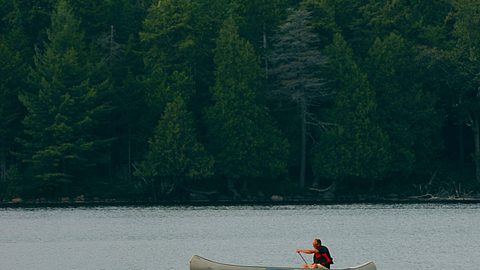
 New York State Hotels for the Foliage Premium Weekend
New York State hotels for a weekend, from Adirondack great camps to Catskills motels, with foliage-season premium windows that shift every autumn.
New York State Hotels for the Foliage Premium Weekend
New York State hotels for a weekend, from Adirondack great camps to Catskills motels, with foliage-season premium windows that shift every autumn.
-
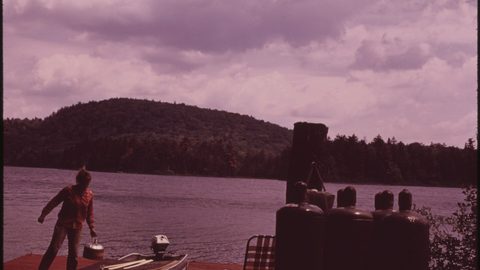 Where to Stay in New York State for a Weekend Base
Choose a New York State weekend base town by drive time from NYC or Boston, diner availability, and seasonal windows that determine whether you get foliage or black flies.
Where to Stay in New York State for a Weekend Base
Choose a New York State weekend base town by drive time from NYC or Boston, diner availability, and seasonal windows that determine whether you get foliage or black flies.
-
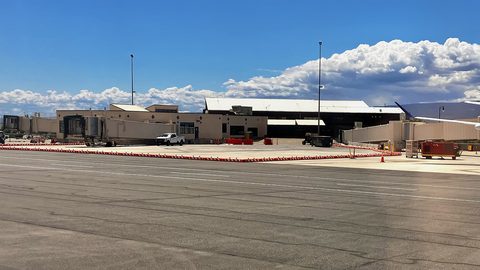 Flying In for a Northeast Weekend and Which Airport Saves the Drive
Which New York airport to fly into for a weekend road trip, ranked by how much drive time each one saves you.
Flying In for a Northeast Weekend and Which Airport Saves the Drive
Which New York airport to fly into for a weekend road trip, ranked by how much drive time each one saves you.
-
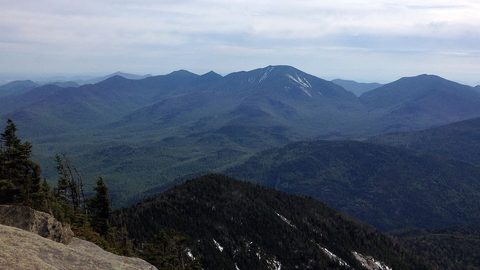 New York State Weekend Drives Worth the Fuel Gauge
New York State weekend drives ranked by honest distance from New York City and Boston, with seasonal windows for foliage, black flies, and mud season that shift each year.
New York State Weekend Drives Worth the Fuel Gauge
New York State weekend drives ranked by honest distance from New York City and Boston, with seasonal windows for foliage, black flies, and mud season that shift each year.
-
 Best Time to Visit New York State for a Weekend Drive
Find the right weekend window for New York State, with foliage, black fly, and mud season timing that shifts year to year, plus the honest case for November and April.
Best Time to Visit New York State for a Weekend Drive
Find the right weekend window for New York State, with foliage, black fly, and mud season timing that shifts year to year, plus the honest case for November and April.
-
 Driving the Northeast for a Weekend Without Losing Friday
Which Northeast roads work for a Friday escape from New York City or Boston, with honest drive-time bands and seasonal hazard windows that shift each year.
Driving the Northeast for a Weekend Without Losing Friday
Which Northeast roads work for a Friday escape from New York City or Boston, with honest drive-time bands and seasonal hazard windows that shift each year.
-
 Catskills
 towns and hikes ranked by real Friday-afternoon drive time from Manhattan, with season windows.
Catskills
Catskills towns and hikes ranked by real Friday-afternoon drive time from Manhattan, with season windows.
-
 New York City
The weekend starts when you clear the merge. How to leave New York City by car on a Friday and get back in on Sunday without losing hours.
New York City
The weekend starts when you clear the merge. How to leave New York City by car on a Friday and get back in on Sunday without losing hours.
-
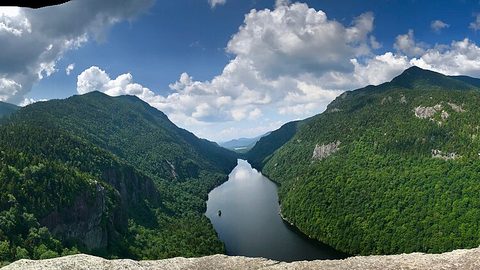 Adirondacks
Adirondack towns and trailheads sorted by drive time from NYC and Boston, with black fly and mud season windows.
Adirondacks
Adirondack towns and trailheads sorted by drive time from NYC and Boston, with black fly and mud season windows.